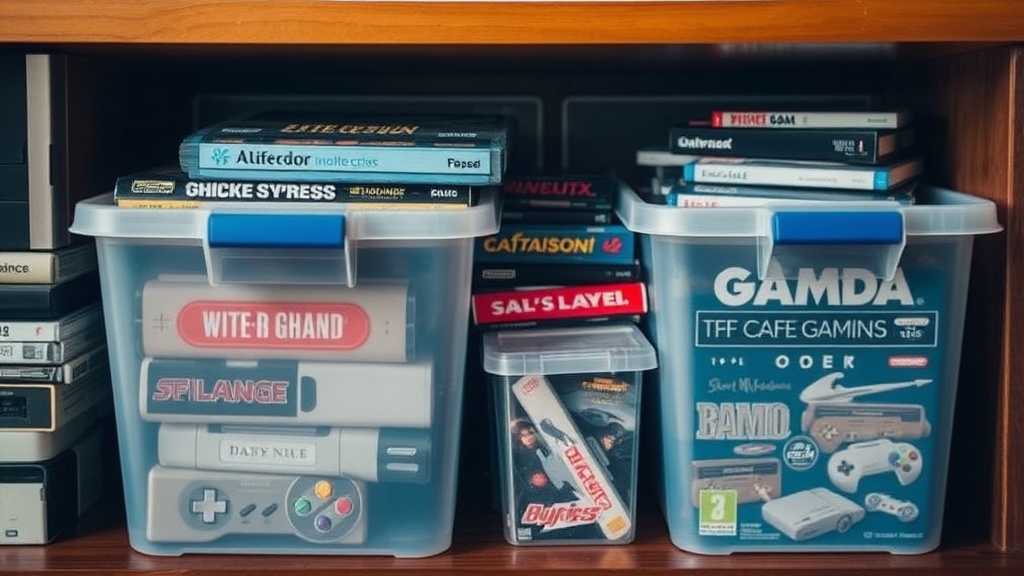
Why You Should Stop Storing Your Retro Games in Plastic Bins

The belief that a heavy-duty plastic storage bin is the safest way to preserve a retro game collection is a dangerous fallacy. While these bins offer protection against physical impact and dust, they create a micro-environment that is often hostile to the long-term survival of semiconductor components and PCB integrity. This post examines the chemical and environmental risks of plastic bin storage—specifically off-gassing, moisture retention, and heat trapping—and provides a professional-grade alternative for collectors who view their cartridges as high-value assets.
The Invisible Threat: Plastic Off-Gassing and Chemical Leaching
Most consumer-grade plastic bins found at big-box retailers are manufactured from high-density polyethylene (HDPE) or polypropylene (PP). While these materials are durable, they are not chemically inert in the way archival-grade materials are. Over time, many plastics undergo a process known as off-gassing, where volatile organic compounds (VOCs) are released into the air. When you seal a collection inside a bin, you are essentially creating a concentrated chamber of these gases.
For a game cartridge, the primary concern isn't just the plastic shell, but the internal components. The traces on a PCB (Printed Circuit Board) and the solder joints are susceptible to chemical reactions. If the off-gassing includes acidic compounds, it can lead to the gradual degradation of the metal contacts. This is often a precursor to internal corrosion within your cartridges, which can eventually lead to permanent data loss or a failure to boot.
Furthermore, certain types of low-quality plastics contain plasticizers—chemicals added to make the plastic more flexible. As these migrate to the surface, they can create a thin, tacky film. If a cartridge is stored in direct contact with these surfaces, the film can bond to the plastic shell or, more critically, seep into the seams of the cartridge, potentially affecting the contact pins or the internal battery (if applicable).
The Humidity Trap: Why Airflow Matters
The most significant mistake collectors make with plastic bins is sealing them too tightly. A common misconception is that a "hermetic seal" is the gold standard for preservation. In reality, a sealed plastic bin is a humidity trap. If there is even a trace amount of moisture in the air when you close the lid, that moisture is locked inside. As the ambient temperature in your home fluctuates, the air inside the bin expands and contracts, creating a cycle of condensation.
This trapped moisture is the primary driver of battery leakage and board oxidation. For cartridges containing a lithium battery (such as the Legend of Zelda: A Link to the Past on SNES), this environment is particularly lethal. The moisture accelerates the chemical breakdown of the battery, which can lead to alkaline leakage. Once a battery leaks, the electrolyte fluid can eat through the PCB traces in a matter matter of months, turning a $200 collectible into a paperweight.
If you insist on using bins for short-term transport, you must integrate a moisture management system. Simply tossing a few packets into a bin is rarely enough if the bin is poorly ventilated. For a truly stable environment, you should understand why your collection needs a dedicated silica gel setup to actively manage the internal atmosphere rather than just reacting to it after the damage is done.
Thermal Mass and Heat Retention
Plastic is an excellent insulator. While this sounds beneficial, it is actually a liability for electronic storage. When a plastic bin is placed in an attic, a basement, or even a closet near a heating vent, it acts as a thermal reservoir. The heat absorbed by the plastic stays trapped inside the bin for much longer than it would in an open-air environment.
High temperatures accelerate several degradation processes:
- Battery Depletion: Heat increases the rate of chemical discharge in internal batteries, shortening the lifespan of the save file.
- Plastic Degradation: The shells of many 8-bit and 16-bit games are prone to "yellowing" due to bromine flame retardants reacting to heat and UV exposure. A closed bin can trap the heat that fuels this reaction.
- Component Stress: Extreme temperature swings cause the various materials within a cartridge—the PCB, the plastic shell, and the silicon chips—to expand and contract at different rates. This mechanical stress can eventually lead to micro-fractures in solder joints.
The Professional Alternative: Modular and Archival Storage
If you are managing a collection that holds significant market value, you should transition away from bulk bin storage toward a modular, high-visibility system. The goal is to balance protection with accessibility and environmental control.
1. Acrylic Display Systems
For your "A-List" items—the ones you actually want to look at—use high-quality, UV-resistant acrylic cases. Unlike cheap plastic bins, professional acrylic displays are designed for display, not just storage. They provide a rigid structure that prevents crushing and offers much better clarity. More importantly, they allow you to display your collection in a way that is part of your room's decor rather than a hidden box in a closet.
For loose cartridges that aren't in boxes, building a custom acrylic display ecosystem is the superior method. It ensures that each game is individually protected while remaining easily accessible for testing or inspection.
2. Modular Plastic Cases (The "Small-Scale" Approach)
If you must use plastic for organization, move away from large, single-compartment bins. Instead, use small, modular cases designed for electronics or media. These smaller volumes are easier to manage with desiccant packs and are less likely to create massive, uncontrollable micro-climates. Look for cases that are "acid-free" or "archival grade," often marketed for film or high-end hobbyist use.
3. Controlled Environments
Regardless of the container, the environment is the most important variable. Your collection should ideally be kept in a room with a stable temperature (65-75°F) and a consistent humidity level (between 35% and 45%). Avoid storing your collection in garages, basements, or attics, as these areas experience the most violent shifts in temperature and humidity, which are the primary enemies of retro hardware.
Summary of Best Practices
To ensure your collection remains an asset rather than a liability, follow these technical guidelines:
- Eliminate Bulk Bins: Stop using large, unventilated plastic bins for long-term storage. They are chemical and moisture traps.
- Prioritize Airflow and Desiccants: If you use any form of enclosed storage, you must use high-grade silica gel to manage moisture.
- Monitor Temperature: Keep your collection in climate-controlled living spaces. Never store games near heat sources or in uninsulated areas.
- Use Individual Protection: Use acrylic cases or specialized cartridge holders to prevent physical contact and minimize the risk of a single failure (like a leaking battery) affecting the entire collection.
Treating your collection like a set of loose parts is a recipe for depreciation. By implementing these professional storage standards, you are not just "storing games"—you are preserving a piece of computing history.