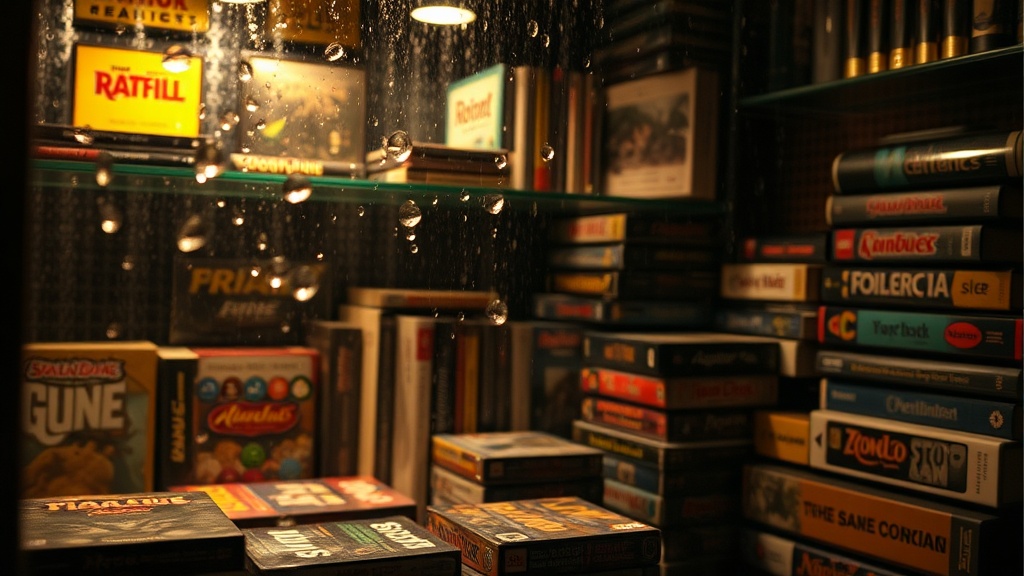
Managing Humidity Levels for Your Rare Game Collection

A high-end collector once showed me a pristine, boxed copy of EarthBound that had succumbed to a subtle, creeping rot. The cardboard box had begun to swell, and the internal structural integrity of the packaging was compromised by microscopic fungal growth—all because the humidity in his basement storage room sat at a constant 65%.
This post examines how relative humidity (RH) affects the physical components of a game collection, from the PCB (printed circuit board) and copper traces to the cardboard integrity of high-value boxes. We'll look at the technical reasons why moisture is the enemy of retro hardware and how you can maintain a stable environment to protect your investment assets.
How Much Humidity is Best for Retro Games?
The ideal relative humidity for a collection of retro games and cardboard packaging is between 35% and 45%. Maintaining this specific range prevents the two biggest threats to your collection: excessive dryness that cracks plastic and excess moisture that breeds mold or corrodes metal components.
If you're storing games in a climate-controlled room, you're already ahead of the curve. But most collectors don't live in a laboratory-grade environment. They live in houses where the seasons change and the air fluctuates. A sudden spike in humidity can cause the metal pins on a cartridge to oxidize, leading to the dreaded "dirty contact" error. This isn't just a nuisance; it's a degradation of the hardware itself.
I've seen collectors lose thousands in value because they ignored the air quality in their storage areas. A $500 Nintendo 64 cartridge is useless if the gold-plated pins have turned green from oxidation. It's not just about the game working; it's about the preservation of the physical asset. If you aren't tracking your ambient air, you're gambling with your collection.
The Dangers of High Humidity
When humidity climbs above 55%, you enter the danger zone for organic materials and metal. Cardboard boxes—the holy grail for many high-end collectors—are essentially cellulose. They are incredibly hygroscopic, meaning they absorb moisture from the air. This leads to "foxing" (those brown spots you see on old paper) and structural softening.
- Metal Corrosion: Moisture reacts with the copper and tin on the PCB. This creates oxidation that can eventually sever the electrical connections.
- Mold and Mildew: High humidity provides the perfect breeding ground for spores. Once mold hits a game box or a paper manual, it's incredibly difficult to reverse without damaging the item.
- Label Peeling: Moisture can weaken the adhesive used on labels, causing themen to lift or bubble.
It's worth noting that most modern electronics are built to withstand some level of moisture, but we aren't talking about a PlayStation 5 here. We're talking about 30-year-old hardware with specialized alloys and delicate paper goods. Treat them like the museum artifacts they are.
If you're already worried about environmental factors, you should also be avoiding direct sunlight, as UV rays can cause the plastic to become brittle and the labels to fade alongside the humidity issues.
What Tools Do I Need to Monitor Humidity?
You need a digital hygrometer to accurately track the relative humidity in your storage area. A basic, standalone hygrometer is often sufficient, but for serious collections, you'll want a device that can log data over time.
Don't rely on your sense of "feeling" the air. You might think a room feels dry, but a sensor might reveal a hidden pocket of moisture near a wall or window. I recommend brands like ThermoPro or Govee. These are affordable, reliable, and many models sync to your phone via Bluetooth or Wi-Fi, giving you alerts if the levels spike. It's a small price to pay to prevent a massive loss in asset value.
If you are storing your games in a dedicated display area, you might want to look at more permanent solutions. For example, a high-quality dehumidifier can act as your first line of defense. However, a dehumidifier alone isn't a silver bullet. You need to ensure the air is actually circulating. Stagnant air is a recipe for localized humidity pockets.
| Humidity Level (%) | Risk Level | Potential Impact |
|---|---|---|
| Below 30% | Moderate | Plastic brittleness, label curling, static buildup |
| 35% - 45% | Low | Optimal for both electronics and paper |
| 50% - 60% | High | Slow oxidation of pins, slight cardboard softening |
| Above 65% | Extreme | Mold growth, heavy corrosion, box deformation |
When using a dehumidifier, avoid placing it directly next to your collection. You don't want the concentrated airflow to dry out the plastic too aggressively. The goal is a stable, ambient environment, not a blast of dry air.
The Role of Air Circulation
Airflow is often the unsung hero of preservation. If you have a collection tucked away in a corner or a closed cabinet, the air inside that cabinet might be much more humid than the rest of the room. This is why I always suggest organizing your collection using modular systems that allow for some breathability. If you pack your shelves too tightly, you're creating micro-climates where moisture can settle and linger.
How Do I Fix Humidity Damage?
If you find that your collection has already been exposed to high humidity, the first step is to stabilize the environment before attempting any physical cleaning. You cannot "fix" a rusted PCB or a moldy box by simply wiping it down in a damp room.
If you see signs of oxidation on the gold-plated pins of a cartridge, the standard procedure is to use a specialized electronic contact cleaner. I've used DeoxIT for years to restore connectivity to problematic cartridges. It's a chemical solution designed to dissolve oxidation without being overly abrasive. However, use it sparingly. You aren't trying to strip the metal; you're just cleaning the surface.
For cardboard-based damage, there isn't much you can do once the structural integrity is lost. If a box has "bloated" due to moisture, it's a permanent change in the fiber of the paper. My advice? Prevent it. Once a box has mold, it's often a lost cause for high-end collectors. You'll need to isolate that item immediately to prevent the spores from spreading to the rest of your inventory.
- Isolate the item: Remove any moldy or damp items from your main collection immediately.
- Stabilize the room: Run a dehumidifier until the room reaches the target 40% range.
- Clean the contacts: Use a specialized cleaner (like DeoxIT) for metal pins.
- Assess the damage: Determine if the damage is cosmetic (labels) or functional (circuitry).
For general maintenance, I always suggest protecting your games with acid-free sleeves. While a sleeve won't stop a massive flood, it does provide a minor buffer against ambient humidity and prevents direct contact with the air. It's an extra layer of defense that helps maintain the "mint" status of your items.
One thing to remember: if you're using a plastic protector, don't use one that is too tight. If the fit is too snug, you might trap moisture inside the protector, creating a miniature greenhouse effect. This is a common mistake with cheap, non-breathable plastics. Always ensure there is a tiny amount of air space, or use high-quality, archival-grade materials.
If you're dealing with a collection that's already showing signs of neglect, don't panic. Start with the most valuable pieces first. Stabilize your environment, get a reliable hygrometer, and start tracking the numbers. Knowledge is your best tool when it comes to long-term preservation.