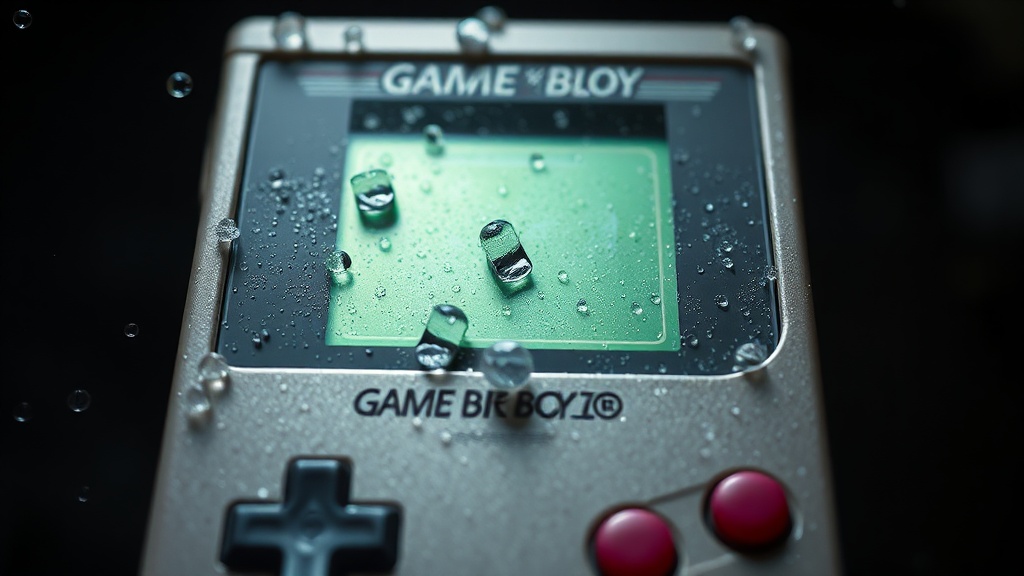
The Silent Killer: Why High Humidity Destroys Your Game Boy Battery Compartments

A pristine, mint-condition Game Boy Color sits inside a glass display case in a humid climate like Southeast Asia. To the naked eye, the translucent purple shell looks flawless. However, beneath the surface, a slow chemical reaction is underway. A single AA alkaline battery, left inside the compartment for a few months too long, begins to leak a caustic alkaline paste. The moisture in the air accelerates the breakdown of the battery casing, and within weeks, the gold-plated contact springs are coated in a crust of white, crystalline potassium hydroxide. The device, once a centerpiece of a collection, is now a paperweight.
In the world of high-end game collecting, we often obsess over surface-level aesthetics: the clarity of a Wata-graded box or the lack of scratches on a cartridge label. But the most devastating damage often occurs where we cannot see it—inside the battery compartment. Humidity is not just an annoyance; it is a catalyst for electrochemical corrosion that can permanently destroy the conductive pathways of vintage handheld consoles.
The Chemistry of Corrosion: Why Moisture is the Enemy
To understand why humidity is so lethal to hardware like the Game Boy, the Game Gear, or the Neo Geo Pocket, one must understand the relationship between moisture and electrolytes. Most vintage handhelds rely on spring-loaded metal contacts to complete a circuit with batteries. These contacts are typically made of copper or brass, often plated with a thin layer of nickel or gold to prevent oxidation.
When relative humidity (RH) rises above 60%, the air carries enough water vapor to settle on these metal surfaces. This moisture acts as a bridge, allowing microscopic amounts of residual battery chemicals or atmospheric pollutants to react with the metal. This process, known as galvanic corrosion, occurs when two dissimilar metals are present in a moist environment. Even if you are using high-quality Duracell or Energizer alkaline batteries, the tiny amount of electrolyte residue left on the terminals can trigger a chain reaction when combined with high humidity.
The result is the formation of metal oxides and salts. If you open a battery compartment and see a white, powdery substance, you are looking at the physical manifestation of a chemical failure. This powder is highly conductive and corrosive; it doesn't just block the connection, it actively eats away at the metal plating, eventually leading to a total loss of electrical continuity.
The "Hidden" Threat: Alkaline Leakage and Ambient Moisture
While many collectors assume that removing batteries prevents damage, the reality is more complex. Alkaline batteries (the standard AA and AAA variety) are prone to "venting" as they age or undergo temperature fluctuations. This venting releases potassium hydroxide, a strong base. In a low-humidity environment, this leak might stay localized. However, in a high-humidity environment, the moisture in the air facilitates the spread of this caustic fluid across the entire contact assembly.
Common Scenarios of Damage:
- The Storage Oversight: Leaving a Game Boy Advance SP in a drawer in a non-climate-controlled basement. The seasonal humidity spikes cause the battery seals to fail, and the moisture accelerates the spread of leaked electrolyte.
- The "Quick Play" Mistake: Using rechargeable NiMH batteries that have been stored in a humid environment. While NiMH is generally more stable, the moisture can still facilitate surface oxidation on the terminal springs.
- The Display Trap: Placing handhelds in glass display cases without proper ventilation. If the case is not airtight, humidity can become trapped inside, creating a micro-climate that is even more aggressive than the room's ambient air.
Technical Mitigation: Protecting Your Investment
If you treat your collection as a set of investment assets, your storage protocol must be rigorous. You cannot simply "hope" the weather stays dry; you must actively manage the environment. This goes beyond the surface-level care discussed in mitigating UV degradation in transparent shells, as the threat here is internal and chemical rather than external and light-based.
1. The "Zero-Battery" Rule
The single most effective way to prevent battery-related corrosion is to never, under any circumstances, store a handheld console with batteries inside. This applies to both alkaline and rechargeable batteries. Even if you plan to play the device again in a week, the risk of a leak or terminal oxidation is too high. If you are a serious collector, your inventory should consist only of the hardware and the batteries stored separately in a moisture-controlled container.
2. Controlled Relative Humidity (RH)
For a professional-grade collection, aim for a consistent relative humidity of 35% to 45%. Anything above 50% begins to increase the rate of oxidation on exposed metal components. If you are displaying hardware in a room, a dedicated dehumidifier is non-negotiable. Do not rely on a standard air conditioner, as these often cycle on and off, creating fluctuations in humidity that can be more damaging than a constant, slightly higher level.
3. Use of Desiccants and Silica Gel
For smaller collections or individual high-value units, utilize silica gel packets. However, do not simply toss a loose packet into a plastic bin. Use high-grade, indicating silica gel that changes color when saturated. Place these in airtight, non-permeable storage containers (such as heavy-duty Pelican cases or high-quality plastic bins) to create a localized dry environment. This is particularly important if you live in coastal areas where salt-heavy air can further accelerate the corrosion process.
Emergency Recovery: How to Handle Existing Corrosion
If you have discovered a Game Boy with white powder or green/blue oxidation on the battery terminals, do not panic, but do not attempt to "scrape" it off with a screwdriver. Aggressive scraping can remove the precious metal plating (gold or nickel) that protects the base metal, leaving it even more vulnerable to future damage.
The Professional Cleaning Protocol:
- Neutralize the Base: Since alkaline leaks are basic (high pH), you need a mild acid to neutralize them. Use a cotton swab dipped in a small amount of white vinegar or isopropyl alcohol (90% or higher). Note: Vinegar is more effective at neutralizing the potassium hydroxide, but isopropyl alcohol is better for drying.
- Gentle Abrasion: Use a specialized electronic contact cleaner, such as DeoxIT D5. This is the industry standard for a reason. Apply a small amount to a specialized contact cleaning tool or a fine-bristle brush and work the solution into the spring contacts.
- Mechanical Cleaning: Once the chemical reaction has been neutralized and the residue loosened, use a fiberglass scratch brush or a specialized contact cleaning tool to gently lift the remaining oxidation.
- Dry Thoroughly: Ensure the compartment is completely dry before inserting any new batteries or attempting to power the device on. Any residual moisture will only restart the cycle.
The Long-Term Outlook for Collectors
As the market for vintage handhelds continues to mature, the distinction between "collector grade" and "damaged" becomes increasingly sharp. A device with corroded battery terminals is often viewed as a "parts unit" rather than a functional collectible, significantly devaluing the asset. This is especially true for high-end, graded consoles where the physical integrity of the hardware is scrutinized.
Maintaining a collection requires a shift in mindset from "player" to "curator." A player cares about whether the device turns on today; a curator cares about whether the device will be functional twenty years from now. By controlling the humidity, removing batteries, and understanding the chemistry of the components, you ensure that your collection remains a viable asset rather than a casualty of environmental decay.
Treat your hardware with the same respect you would a piece of fine art or a high-grade trading card. The silent killer—humidity—is always present, but with the right technical protocols, it is a threat you can entirely neutralize.