Tech Trends 2026: Why AI Infrastructure Can't Authenticate Your Retro Cartridges

If you’ve spent any time reading the trades this March, you know the single biggest headline is the relentless expansion of AI infrastructure. It’s tightening its grip on the global tech agenda, promising to automate, authenticate, and streamline everything. The prevailing narrative for tech trends in 2026 is that if a process isn't running through a neural net, it's obsolete.
That might be true for optimizing server loads or algorithmic trading, but let me tell you where this "future technology" falls flat on its face: a $2,000 copy of *Earthbound*.
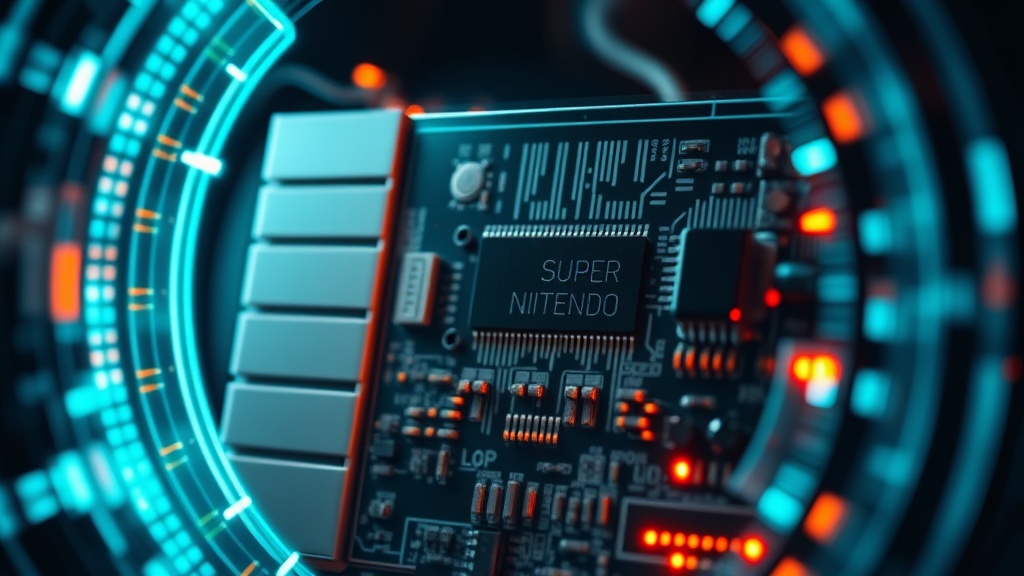
Lately, I've seen a disturbing influx of "AI-powered" authentication apps hitting the retro market. You snap a photo of a Super Nintendo PCB, and the AI infrastructure cross-references it against a database to tell you if the board is authentic. To the average collector, this sounds like a godsend—a frictionless way to verify an asset without needing to know what a mask ROM is.
To a former hardware tech like me, it's a disaster waiting to happen.
Here’s the fundamental flaw with using future technology to analyze hardware from 1990: AI expects consistency. It assumes that manufacturing is a clean, uniform process. But anyone who spent the late 90s in the back of a repair shop inhaling isopropyl alcohol fumes knows that Nintendo’s manufacturing was anything but uniform.
Nintendo used multiple factories across different regions, and the soldering jobs varied wildly. Sometimes they used different suppliers for the SRAM; sometimes a legitimate, factory-issued board looks like it was soldered by a blindfolded intern because of a mid-run component shortage. An AI trained on "perfect" boards will flag a legitimate, multi-factory quirk as a counterfeit.
Worse still, an AI can't *smell* a board. When I authenticate a high-dollar cartridge, I'm not just looking at the trace routing. I'm looking at the age of the flux residue. I'm feeling the slight variance in the PCB thickness. I'm examining the micro-abrasions on the edge connector. A cleverly rehoused reproduction with modern rosin might pass an optical scan by an AI, but it won’t pass a ten-second visual and tactile inspection by someone who knows what 30-year-old electronics are supposed to feel like.
AI infrastructure is an incredible tool for data, but physical artifacts are messy. They carry the physical scars of their history. When you're dealing with assets that trade like blue-chip stocks, relying on an automated optical scan is a dangerous gamble.
The tech trends of 2026 might be pointing towards a machine-verified world, but in the trenches of hardware preservation, the human eye—and a good multimeter—is still the only verification protocol that matters. Don't let the hype of future technology separate you from your money. Trust the hardware, not the algorithm.