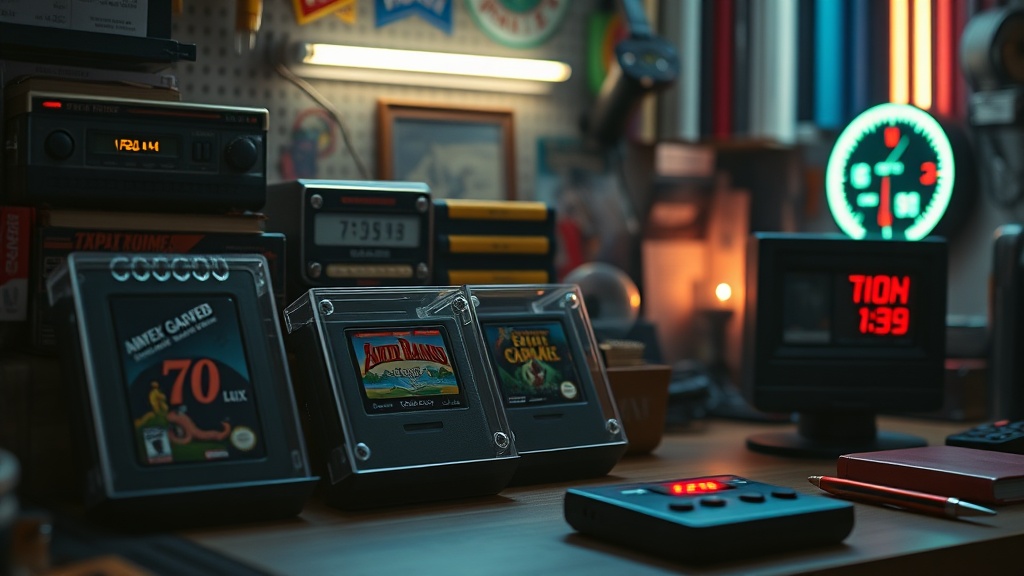
Display Burn Is Real: A 2026 Light + Humidity Protocol for Boxed Cartridges

Display Burn Is Real: A 2026 Light + Humidity Protocol for Boxed Cartridges
Collectors obsess over price charts and serial variants, then park a five-figure shelf in a sunlit room and wonder why labels mute out by summer.
Here is the blunt truth: light damage and bad humidity are slow-motion destruction. You do not notice it week to week, but you absolutely notice it year to year.
My position is simple: if you treat cartridges as assets, you need museum-style exposure discipline at home.
Why This Matters in 2026
The market has shifted from "play copy" economics to condition-premium economics. A small color shift on a label or a slight box warp can be the difference between "collector-grade" and "settle-for-less" when you sell, trade, or insure.
Recent conservation guidance remains clear on two points:
- Light damage is cumulative and irreversible.
- Humidity swings accelerate embrittlement, mold risk, and physical distortion in paper components.
That maps directly to boxed cartridges, inserts, manuals, and labels.
The Numbers I Actually Use
From a collector operations standpoint, these are the practical guardrails:
- Display illuminance: keep sensitive paper-heavy items around
50-100 lux. - UV target: as close to
0-10 µW/lmas your setup allows; do not exceed75 µW/lm. - Room RH target for mixed paper/plastic holdings:
30-50% RHwith minimal daily swing. - Temperature: stable is king; avoid heat sources and window-adjacent hotspots.
If that sounds strict, good. Strict is cheaper than replacing faded paper and warped boxes.
The 20-Minute Shelf Audit
Run this once this weekend:
- Check sunlight path from 10:00 to 16:00 local time. If direct sun touches boxes, move them or block it.
- Measure shelf-face lux with an entry lux meter (or a calibrated phone app as triage).
- Add UV-filtering film on nearby windows and UV-filtering acrylic on front-facing display doors.
- Install a hygrometer near the collection (not across the room).
- Log one week of RH/temperature and flag spikes, not just averages.
Collectors lose money by measuring once and assuming stability forever.
My Display Hierarchy (What Goes Where)
I split inventory into three tiers:
- Tier A: high-value boxed titles, variants, signed pieces. Dark storage by default, short controlled display windows.
- Tier B: mid-value shelf pieces. Displayed in filtered cases with strict lux control.
- Tier C: player copies. Open shelf, lower stress if cosmetic aging occurs.
Most people do the opposite: best pieces in the brightest spot for social proof. That is backwards.
Fast Fixes That Actually Work
- Replace harsh strip lighting with dimmable, low-UV LEDs.
- Put displays on smart plugs and cut light exposure when nobody is in the room.
- Rotate premium pieces monthly to reduce cumulative exposure.
- Use archival-safe box protectors for friction and dust control.
- Keep collections off exterior walls in humid climates.
You do not need a museum budget. You need repeatable rules.
Mistakes I See Constantly
- "No direct sunlight" but skylight blast all afternoon.
- RH readings from one cheap meter that is never validated.
- Display cases with clear acrylic that has no UV spec.
- Gaming rooms near kitchens or bathrooms where humidity spikes daily.
A clean room can still be a destructive room.
What I’d Do Tonight If I Were Starting From Zero
- Move top 10% value items into dark storage immediately.
- Cap display lights to conservative brightness.
- Add one reliable hygrometer and one lux meter.
- Set a monthly inspection reminder for labels, box edges, and tray warping.
This is not about paranoia. It is about preserving condition premium and avoiding avoidable loss.
Protecting the assets of our youth means treating paper, plastic, and ink like the finite materials they are.
Sources
- Conservation Center for Art & Historic Artifacts (light exposure, lux ranges, UV limits): https://ccaha.org/resources/light-exposure-artifacts-exhibition
- Smithsonian Institution Archives (temperature/RH guidance for paper-based collections): https://siarchives.si.edu/what-we-do/preservation/environment